Showing posts with label homemade dishes. Show all posts

12 Jan 2016

sweet soy spare ribs


This was one of the first dishes I ever made at home that was well received. It originates from Mark Robinson's Izakaya: The Japanese Pub Cookbook which I borrowed from the local library. I remember writing the recipe down in a notebook but have either misplaced it or threw it out by accident. Unfortunately I have never seen it at the library again so this is made based on my memory with some changes.

◯ ◯ ◯

sweet soy spare ribs     serves 4 as part of a shared meal
based on a recipe from Izakaya: The Japanese Pub Cookbook which I no longer have a copy of

pictured with roast potato salad

800g pork spare ribs
dash of sesame oil
3 cloves garlic, grated finely
white/black pepper, as required
1 onion, sliced thinly
coriander, optional

marinating sauce
100ml kikkoman soy sauce (light soy sauce)
100ml sake
100ml mirin
2 tsp dark soy sauce

For the sauce: Combine kikkoman, sake, mirin and dark soy sauce. Bring to a boil. Lower heat and simmer for 10 minutes or until liquid has been reduced by half. Turn off heat and stir in sesame oil. Cool.

Wash and drain pork ribs. Marinate with garlic, pepper and onion. Pour 100ml of the marinating sauce to cover. Reserve remaining sauce. Wrap and refrigerate overnight. The next day turn ribs over.

Take ribs out 30 - 40 minutes prior to cooking. Line a baking tray with foil and lightly grease it with oil.

Place ribs on the baking tray and drizzle with some oil. Bake at 200C for 45 minutes underside. Flip and bake for another 10 minutes until slight charred around the edges.

Cut and serve with coriander and reserved marinating sauce.

4 Jan 2016

chinese style roast chicken


I've spoken about sand ginger powder before and have finally figured out why it smells so familiar. The reason - Four Seasons spicy bake mix (四季盐烤鸡粉), a pre-mixed spice my parents sometimes use when they fry/bake chicken wings or spare ribs. 

This doesn't taste quite like it but feel free to use it as a substitute. 

◯ ◯ ◯

chinese style roast chicken 中式烤鸡    serves 4 - 5 as part of a meal

4 pieces chicken maryland
3 cloves garlic, finely grated
ground white/black pepper
2 ½ tsp salt
6 tsp sand ginger powder (沙姜粉)
½ tsp five spice powder (五香粉)
glug of shaoxing wine (绍兴酒)
cooking oil, as required
coriander, washed (optional)

Wash and trim excess fat off the chicken marylands. Drain.

Rub on garlic and pepper. Season with salt, sand ginger and five spice powder. Dab on shaoxing wine. Wrap and refrigerate overnight.

Take chicken out 30 - 40 minutes prior to cooking. Line a baking tray with foil and lightly grease it with oil.

Place chicken on the baking tray and drizzle with some oil. Bake at 200C for 1 hour and 15 minutes underside. It should be of a dark golden colour. Flip and bake for another 15 - 30 minutes until golden.

Top with coriander.

14 Jan 2015

wonton or suigao?


Remember those bland wontons I made sometime last year? I think I have redeemed myself this week. Based on the notes I made after the first batch, I think these ones are just as good as my dad's. I was a bit more generous with the seasoning and remembered to add the oyster sauce this time! My dad reckons adding a bit more oyster sauce would better, but my mum and I agree that it is fine as is, since they both like to dip it in chilli and soy sauce later.

Whilst eating dinner last night, my mum said, "Look at these, they're not wontons, they're massive. More like suigao to me." This made me question which one were these. If I were to compare the wontons I've had in Malaysia, then mine would be "on steroids" because the ones in Malaysia are so tiny whereas mine has at least two bites (suigao sized). From the same Chowhound post, I found out both fillings differ according to regions in China too. The ones we make at home lean on the Cantonese version suigao minus the bamboo shoots - which is how my dad differentiates the two. Last time he also said that the wrapping is also the same, except for wontons, the excess skin is pinched together at the end to form a money bag shape.

If I were to be asked whether these are suigao or wontons? I'd still call them wontons because it's what we call it at home. But perhaps ours is a fusion...

◯ ◯ ◯ 

my dad's wantan (wonton)     serves a party
adapted from my dad's recipe passed down verbally

The wantan recipe below makes a lot, so if you re intending for a smaller meal, you can either choose to scale down or freeze the remaining meat for up to one month for future meal/s.

600g prawn meat (of the shelled and deveined kind)
600g pork / chicken mince
5 pieces dried shiitake mushrooms*
3 pieces dried wood ear fungus*
1 kg wonton wrappers

seasoning
30g (3 level Tb) potato starch
28g (2 1/2 Tb) sesame oil
15g (2 1/2 heaped tsp) sea salt
15g (3 heaped tsp) chicken stock powder
15g (1 Tb) oyster sauce
8g (1/2 Tb) shaoxing wine
3g (1 tsp) sugar
white pepper, as little/much as you like

[The day before]
Soak shiitake mushrooms and wood ear fungus in a large bowl of cold water overnight. 

[On the day]
Squeeze water out of the shiitake mushrooms and remove the stalks (add to the chicken stock if you want). Slice thinly then finely chop. Drain water from wood ear fungus, slice thinly, then finely chop. Transfer to a large mixing bowl.

Slice prawns in half, then roughly chop. Add to the mushrooms.

Add mince and seasoning to the bowl and mix until everything amalgamates. This will take anywhere from 5 - 10 minutes of solid mixing with your dominate hand**. Transfer to a container and wrap until needed.

[To serve]
Bring a large pot of water to a rolling boil.

Wrap the wantan. Don't wrap them too early in advance because the skins will start sticking to each other.

Add wantan to the boiling water. Stir occasionally to prevent sticking. When they float to the top, they are almost ready. Allow 30-60 seconds more. Scoop them out with a shallow sieve. Serve with some broth or transfer to a plate/bowl.

Serve wantan with egg noodles and blanched asian greens. Ladle in hot chicken stock. Garnish with spring onions, coriander and fried shallots. Sprinkle some white pepper on top.

*The amount of mushrooms and fungus, more or less, doesn't really matter. For reference, I used 100g shiitake and 70g wood ear (after draining).

**I find it helpful to wear a food/thin plastic glove

9 Jan 2015

my favourite dish


[Long post! May be tltr.]

Lo and behold! My favourite Vietnamese dish, cơm bò lúc lắc...the one thing I order most when we eat out at local Vietnamese restaurants. I've probably tried it at a dozen of places, but only one place makes it to my liking. Over the course of a year (my second/third attempt here) with some initial Google research, I tried to recreate the flavour from the restaurant, but I never made it..! I don't know if it's a secret ingredient* or if some of my measurements are wrong, but along the way I created my own version. 

If you do follow on and read through the recipe, you will realise the wok needs to be washed so many times you may not even want to make this dish to begin with. (But that's mainly because I was cooking with two pieces of beef.) Heck, I may have even complicated a simple Vietnamese home fare but this is how we have been enjoying it at home.  

I took a "long cut" here and have chosen to cook a slab of beef, steak style instead of using diced beef cubes. Why? I find that it gives me better control of the doneness and reduces the sauce from the meat juice. I also think the wok will need to be washed as regularly since the batch size will need to be smaller (if using diced beef). My dad and I have tried cooking this with diced beef last year but we found it become too saucy to our liking. This may also be attributed to the maximum gas heat we have at home. As we prefer the beef in this dish to be on the drier side, I have opted to use a slab of beef instead. Feel free to use already diced beef if it suits you better. 

The recipe and method documented is how I currently make it at home. I'm still fine tuning it as I go, but the measurements below have passed family standards. Feel free to use it as a guide and adapt it to make it your own.

Enjoy!

P.S. From prior research, I found out this dish is called "shaking beef" in the US. "Shaking" comes from the Vietnamese translation of lúc lắc, the action of shaking the wok/frying pan to quickly cook the beef. Well, if you asked me, I think it sounds more exciting than the English translation of "stir fried diced beef cubes with tomato rice" we have in Melbourne.

P.P.S. Check out my sister's blog A Wag Away which details Bobby's (our labrador) antics. I always get a good laugh from her posts. Their instagram account is here.

P.P.P.S. The toasted coconut waffle recipe has been updated!

*With some new googling, the answer may be rice wine vinegar (?!) I'll give it a shot next time and edit this post.

◯ ◯ ◯

cơm bò lúc lắc (stir fried diced beef / shaking beef)     serves 6

2 pieces (about 1kg) beef skirt
1-2 (spanish) onions. cut into squares
cooking oil, as required

beef marinade
60g oyster sauce
25g fish sauce
5g sugar
a dash of sesame oil
black/white pepper, as required

stir fry sauce
20g clear honey
25g light soy sauce
15g fish sauce
dark soy sauce, as required (optional)
black pepper, as required

tomato fried rice
3 rice cups raw rice, cooked and cooled for half a day/overnight rice
3 large eggs, beaten
20g tomato paste (optional - mainly for colour)
tomato sauce / ketchup, as required (mainly for colour)
sea salt, as required
white pepper, as required
chicken stock powder, as required
cooking oil, as required

Marinade/stir fry sauce: Mix ingredients together in separate bowls. Set aside.

Beef: Trim excess fat/veins off the beef. Coat with the beef marinade, wrap and refrigerate for 30 - 60 minutes. 

(I don't know if this next bit is even necessary...but just in case...)

Fried rice: Heat a wok and add cooking oil. Swivel the wok so the oil coats the base and sides. Pour out excess oil onto a bowl for later. On medium heat, add the eggs and quickly stir it in a circular motion (like making scrambled eggs) until it sets. Allow eggs to dry a little before adding rice. Increase heat to high. Toss rice to mix with the eggs. Continue tossing and season as required. Transfer to the rice cooker to keep warm when done.

Beef (cont.): Heat a wok and add cooking oil. Swivel the wok so the oil coats the base and sides. Make sure the wok and oil is smoking at this point! Carefully add the cold beef and cook until bottom becomes brown. Be careful of oil splatter (because the marinade contains water)!! The beef will burn/char a little bit, but it is ok! Flip and cook underside until it is browned. You may need to add more oil if the wok becomes dry. 

Transfer cooked beef on a plate and allow it to rest for 10 minutes. Don't worry about it cooling, because you will need to cook it again. 

If you have another piece of beef to cook, wash the wok and start again. 

Drain excess beef juice. Cut beef against the grain and then into bite sized chunks. Drain excess beef juice. If you don't mind getting your hands a little bit dirty, squeeze out excess beef juice (optional).

As the cold beef was cooked on high heat, the middle is still raw/rare. This is optimum because it can be cooked again quickly without the meat becoming tough.

Repeat with the other piece of beef.

In a smoking, oiled wok, add half (if you have time, cook a quarter batch at a time for better flavour) of the beef and onions. 

Stir fry until beef is cooked then add half of the stir fry sauce, toss, tasting as you go. Adjust seasoning and finish up by cracking in some black pepper before dishing up!

Clean the wok and repeat with the remaining beef cubes.

Do not add too much sauce in one go as I did here. Not only will it make the beef cubes salty, it will make the beef too saucy. If that happens, under season your next batch and mix in the over seasoned batch when ready. (I also forgot to add onions in this batch, oops.)

Serve in a lettuce cup with tomato fried rice, sliced cucumbers and tomatoes. Dig in!

6 Jan 2015

char siu chicken

Baked chicken wings are delicious and there are hardly occasions where there would be leftovers. Savoury sweet and sticky, what's not to like? Back in the day my parents would occasionally use Lee Kum Kee's char siu sauce, but we haven't been buying for a while because we make our own. I can't remember the exact taste of the LKK sauce, but I wrote it tasted very similar to it in my notes.

I had an epiphany last night and thought it would be brilliant to use the sauce for chicken thigh fillet. There's no bone meaning I didn't have to get my hands dirty and I'd be able to eat sooner, since cooking time is greatly reduced. Taste wise, both are the same but the pan fried version is more saucier compared to the wings which are drier. I've left notes below, so you can decide which version you like best.

P.S. I bet you thought this was teriyaki chicken. 

● ● ●

char siu chicken     serves 4

2-3 pieces of chicken thigh fillet
sea salt, as required
white pepper, as required
cooking oil, as required

char siu sauce
125g tomato sauce
60g hoisin sauce
40g clear honey
30g light soy sauce
20g mirin
10g brown sugar
1 tsp dark soy sauce (optional)
1/4 tsp five spice powder
1 clove garlic, finely grated*
a dash of sesame oil
maltose**, melted, as required (optional)

Trim excess fat off chicken thigh fillets, cut into two if necessary and make slits in the thicker part of the meat. Season with salt and white pepper. Cover and leave in the fridge until needed, but take out meat 10-20 minutes before cooking***.

For the sauce: Combine all ingredients except for the maltose in a small pot. Bring to the bowl whilst stirring. Set aside.


When chicken is golden brown on both sides, reduce heat to low. Add 60ml sauce (about 3 Tb / 1/4 cup) and top with a small teaspoon of melted maltose. Gently shake the pan and flip to cover chicken in sauce. Set aside.

Wash the pan before cooking the remaining batch.

To make baked char siu chicken wings: double the sauce and use 2 kg wings for 4 - 5 serves. Marinate wings overnight. Bake at 180 degrees celcius for 30-40 minutes and increase heat to 200 degrees celcius for 15-20 minutes or until done. During baking, turn wings over at least once. When finished, brush some melted maltose on each wing .


*I used an oroshigane (Japanese grater) from Daiso to grate the garlic, but if you don't have one, the small holes on the box grater/microplane are ok too.  

**Maltose can be found in most Asian grocery stalls. It's a very sticky sugar syrup (like glucose) that looks like honey but is faintly sweet. I use it certain dishes to give it a shiny/glossy look. Don't bother trying to measure it, because it'll stick everywhere. Instead, pour a glug of it on a microwaveable bowl or small pan and clean the edge of the container with a wet spoon. Gently heat maltose until it melts. Maltose hardens upon cooling, so you may need to reheat it again.

***I like to steam fry; heat a pan with cooking oil, add chicken and a splash of water. Cover and cook on medium heat until the underside is golden. Uncover, flip and cook until underside is golden. Wash pan before cooking another batch.

29 Dec 2014

cooking chinese

These holidays I have been busy practicing cooking Asian food on most week nights. If anything, measurements are thrown out the window and are done via constant taste testing and adding a bit more of this or that. Usual suspects include: oyster sauce, dark/light soy and fish sauce, sesame oil, shaoxing wine, salt, white pepper and sugar. As aromatics, we have: garlic, ginger, onions, shallots and spring onions. Once you get the swing of things, you'll know how much of each you will need to add. 

Cooking processes are generally the same, and I'm really glad that my parents forced trained me over the years by making getting me to help out in the kitchen (although I was more annoyed than grateful back then). Still, time and time again I still require their expertise and cooking knowledge.

Some of the dishes I made and documented during the past month include: Jason's kari ayampad thai, karaage, Vietnamese grilled beef and beef and mint stir fry

Of the two dishes I'm sharing today, both are special to me in different ways . First eaten at an Asian style cafe, the chicken mushroom steak wow'ed me during my early teens because it was different. It was western. As far as I was concerned, it wasn't stir fried meat and vege or soup noodles therefore special. The tofu dish, I can't really remember when I first ate it (here or Malaysia? hrm...) but I remember my jaws dropping when my mum fished it out of the steaming rice cooker one night. It's silly, but I thought you could only cook rice in a rice cooker...

Anyway, both make excellent dishes for dinner, served with a steaming bowl of freshly cooked rice. 

Enjoy!

◎ ◎ ◎

chinese style chicken mushroom steak     serves 4
sauce adapted from cookpad

2-3 pieces of chicken thigh fillet
sea salt, as required
white pepper, as required
cooking oil, as required

a large handful of string beans, topped and tailed, blanched
2 carrots, peeled and sliced, boiled until firm
1 can of corn kernels, drained

mushroom sauce
20g unsalted butter
35g plain flour
300ml asian chicken stock (or water + 1 tsp chicken stock powder)
1/2 can champignon mushrooms, drained and quartered
3 tsp light soy sauce
1 tsp dark soy sauce
sea salt, to taste
black pepper, to taste
sugar, to taste

Trim excess fat off chicken thigh fillets, cut into two if necessary and make slits in the thicker part of the meat. Season with salt and white pepper. Cover and leave in the fridge until needed, but take out meat 20-30 minutes before cooking*. 

Prepare the vegetables.

For the sauce: Melt butter over a low heat and when fully melted, stir in flour until smooth. Add stock, mushrooms and both soy sauces. Stir until sauce has thickened. Season with salt, pepper and sugar. (Add more soy sauce if necessary.) 

Pan fry chicken until golden brown on both sides. Serve with prepared vegetables, rice and mushroom sauce.

*I like to steam fry; heat a pan with cooking oil, add chicken and a splash of water. Cover and cook on medium heat until the underside is golden. Uncover, flip and cook until underside is golden. Wash pan before cooking another batch.


steamed tofu with prawn and chicken meatballs     serves 4-5 as part of a shared meal
inspired by parents' cooking & 3 hungry tummies

4 leaves chinese cabbage, washed, cut into squares
1 small bundle green bean vermicelli, soaked in cold water until soft and drained (optional)
3 tubes silken tofu, sliced into 8 pieces each
250g prawn meat, chopped roughly
250g chicken/pork mince
1 heaped Tb potato starch
1 tsp salt
1/2 tsp chicken stock powder
a dollop of oyster sauce
a dash of sesame oil
a dash of shaoxing wine
white pepper, as required

finishing sauce*
oyster sauce (1 1/2 Tb), as required
light soy sauce (1 Tb), as required
dark soy sauce (2 tsp), as required (optional)
a dash of sesame oil
water (300 ml), as required
potato starch solution**, to thicken

spring onion, sliced, as required
fried shallots, as required

Arrange cabbage on two ceramic/steel shallow bowls. Divide vermicelli between two plates and scatter around the cabbage evenly. Top with tofu.

Mix prawn and chicken with potato starch, salt, chicken stock powder, oyster sauce, sesame oil, shaoxing wine and white pepper until it binds and forms elasticity. Scoop heaped teaspoons of meat on top of the tofu. Steam for 10-15 minutes over high heat.

Meanwhile, combine oyster sauce, light and dark soy sauce, sesame oil and water to form a broth. Bring to the boil. Gradually pour in the potato starch solution, stirring to thicken. When the dish is ready, ladle sauce over and serve immediately.

Garnish with sliced spring onion and fried shallots to finish.

*Bracketed amounts are estimates; please taste test.

**About 1 Tb potato starch dissolved in a bit of cold water. If the broth is not thick enough to your liking, you may add a bit more solution.

3 Nov 2014

hakka pan mee

Recently at uni, I learnt that one's heritage language and culture is lost at a rate of roughly 30% through each generation. Realisation hit me a long time ago that it would be up to us - the younger generation to learn and preserve it for the future. I'm not referring to traditional Chinese proverbs but more of the food culture. Years ago, I used to lament how no one learnt how to make grandma's home cooked dishes so I made it a point to learn at least one when I went back earlier in the year. I did end up with more scribbled recipes that I would have imagined but haven't exactly replicated anything besides the chiffon cake which I learnt the year before. But I like to think the initiative is something I can use to draw back on in the future.

Making the kon lo (dry tossed) pan mee earlier today, it reminded me that there is still hope. The dish above reminded me of the time I ate out with my cousins by the roadside made by a group of youngsters complete with freshly made noodles and a queue to boot. I'm sure I'll be able to order pan mee at Malaysian restaurants, but I get a kick of learning how to make it myself. I've done it before (1 2 3) but I've been reluctant to share my notes because there are no proper measurements due to the spontaneous nature old school cooking in my house.

Since eating my mum's pan mee earlier last year, I waited until she made it again so I could document it properly. There is no proper recipe but the notes below are actually way more detailed than mine which is pretty much an ingredient list. But I think it's quite flexible if you use it as a guideline and adapt to your own tastes. Just remember to:

1. Look up a proper recipe first if you are unfamiliar with cooking this
2. Taste test continuously  

● ● ●

Notes on my Mum's Hakka pan mee (客家板面)

Stock:
Place two chicken carcasses and 0.5-1 kg pork bones in a large stockpot and cover with water. Bring to a boil, drain and clean the 'dirty stuff' off the carcass/bones under running cold water. Return to the stockpot with a handful of shiitake stems and fill with water. Bring to a boil. Add some fried anchovies. Cover with the lid slightly ajar and simmer for at least 1.5 hours. Skim scum off the top occasionally. Season with salt, fish sauce (optional), a lump of rock sugar and chicken stock powder.

Fried anchovies (ikan bilis):
Wash a generous handful of dried anchovies and drain well. Deep fry in hot oil on low heat until crispy. Drain and reserve oil for later. Add 1/4 portion of the fried anchovies to the stock and drain the rest with a paper towel. Set aside for later. 

Wood ear fungus:
Soak with cold water overnight or hot water if using on the day. Trim off woody ends and cut into thick strips.

Pork mince:
Saute thinly sliced garlic cloves in reserved oil from the anchovies (flavour bomb!!). Add sliced wood ear fungus and stir fry before adding pork mince (about 100g per person). Season with white and black pepper and chicken stock powder. Finish by seasoning with soy sauce and sesame oil. Transfer to a bowl and set aside.

Vegetables:
Blanch and drain leafy green vegetables of your choice. We had them with bok choy this time, but it tastes great with stir fried amaranth (yin choy) as well. 

Noodles:
Cook fresh noodles (we like thick Shanghai noodles) according to packet instructions/"the pinch test". Drain and run under cold water to cool to prevent sticking. Maybe we'll try making the noodles next time...

To serve (soup version):
Arrange cooked noodles and toppings (vegetables, pork mince, fried anchovies, fried shallots, sliced spring onions) into a bowl and carefully ladle in hot stock. 

To serve (dry tossed version):
Toss cooked noodles with oyster sauce, soy sauce, dark soy sauce, white pepper, garlic oil (or melted lard!) and a bit of the stock. Arrange toppings (vegetables, pork mince, fried anchovies, fried shallots, sliced spring onions) into a bowl and you're good to go.

8 Jul 2014

poppin' chicken

I came across this recipe in a local food magazine when I was in Malaysia. It's a home-style fried chicken dish but I was intrigued by "cekur powder" (沙姜粉/sha jiang fen). I asked a supermarket staff if she's heard of it/stock it but she said she wasn't quite sure. A Malay customer tried to help me find it, but we found something else instead. When I got home, I asked my grandma about it and she told me it's a type of ginger and she doesn't like the taste of it. I tried my luck at a herb shop near my grandma's and they actually stocked it. I bought a small quantity back just to make this. Opening the sealed bag, it smells quite fragrant and familiar. I haven't seen it on the shelves in Asian grocers here, but it might be available in traditional herbal medicine shops. If you can't find it, I think it's ok to leave it out since the recipe only requires a little bit.

This actually reminds me of the Taiwanese popcorn chicken (盐酥鸡/yan su ji), sold at a street vendor near my uncle's apartment in Taiwan. We'd pass the stand everyday and grab a bagful on our way out and some more with iced lemon tea on the way home. It was so so addictive just like these!

◯ ◯ ◯

Taiwanese crispy chicken     serves 4 as part of a shared meal
Adapted from Josten Tan’s recipe in Famous Cuisine 名食谱 vol. 85

2 pieces chicken thigh fillet (approx. 500g)
3 cloves garlic, finely chopped
Half a thumb of ginger, finely chopped
30ml soy sauce
Dash of sake or shaoxing wine
50g self raising flour
25g rice flour
Water, as required
Coarse sweet potato flour (粗番薯/地瓜粉), as required* (or cornstarch)
Cooking oil, as required
2 handfuls of Thai basil leaves, roughly chopped
Five spice pepper salt, as required**
A good pinch of sand ginger powder (沙姜粉/cekur/sha jiang fen) powder, (optional)***

Trim excess fat off chicken and cut into thin strips. Cut chicken into bite sized pieces if you want to make popcorn chicken. Marinate with garlic, ginger, soy sauce and wine and leave for a few hours up to overnight.

To make batter, combine self raising and rice flour with enough water (approx. 125ml). Batter should be runny. Add in a glug of cooking oil if you want and mix in thoroughly. Leave to rest for 10-15 minutes and stir again before using.  

Dip chicken strips into batter and coat well with coarse sweet potato flour. Deep fry in hot oil until light golden. Drain chicken of oil and deep fry again until crispy.

In another wok, heat and toss crispy chicken with basil leaves, five spice pepper salt and sand ginger powder until basil leaves begin to dry. Serve hot.

*Should be available in Asian grocery stores near the packaged flour section. I didn't think the flour would fry properly because it was quite lumpy, but after frying, I was surprised those lumpy bits turned into crispy bits.

**My dad makes his own blend and cooks it over a low heated wok. The original spice blend in the magazine includes: 1 Tb five spice powder, 1/2 Tb fine salt, 1/8 tsp sand ginger powder, 1/8 tsp pepper.

***If you can't find it, just leave it out

Edit: 10/07/14 I'm submitting this post to Cook Your Books #14 hosted by Joyce of Kitchen Flavours.

3 Jul 2014

larb gai


I just came back from a short holiday at my grandma's and I think I came back with a new found appreciation for the tropics. One of my main aims for travelling this time round was just to eat (chee cheong fun - steamed rice rolls) and learn some dishes from my grandma; which I am happy to report that I did. Something I miss was the availability of food in such close proximity. I'd often wake up and be taken to have noodles for breakfast. Some days I'd have roasted meat rice, yumcha or walk down to my favourite mamak store for roti telur (roti canai with egg) and teh ais (iced milk tea). Coming back, the food choices available aren't as interesting. Though I guess it gives me a good reason to go again in the future.

Speaking of larb gai, it wasn't something I learnt from my grandma nor did I eat it when I was in KL. Instead, it came from deciding what to do with the chicken mince! I remember eating something similar in a Thai restaurant a while ago and so I began to do a little research in attempt to recreate it. Sweet, savoury, sour and spicy, it tastes great by itself, with some freshly steamed rice or bun (thin rice noodles).

◯ ◯ ◯

larb gai (Thai minced chicken salad)     serves 4+ as part of a shared meal
adapted from Thai Food and Cooking by Judy Bastyra & Becky Johnson and Tiny Urban Kitchen

2 lemongrass roots (white bit), sliced thinly and finely processed
4 cloves garlic, finely chopped
2 shallots, finely chopped
500g chicken mince
cooking oil, as required
sea salt, as required
fish sauce (Squid brand), as required
white pepper, as required
chicken stock powder, as required

Sauce
nuoc mam pha*, as required
Thai sweet chilli sauce (Pantai brand) or chilli sauce, as required

To serve
toasted rice powder (khao khua)**, as required
1 bunch coriander, roots trimmed
1 bunch Thai basil/mint, leaves plucked
1 baby cos lettuce, leaves trimmed
1 lime, cut into 8 wedges

Heat up a wok and add some cooking oil. On low heat, sauté lemongrass, garlic and shallots until fragrant. Transfer to a small bowl. Turn up the heat and add some more cooking oil to cook the chicken mince, allow the bottom to brown before breaking it into small pieces, stirring in the process. When chicken is nearly done, add the lemongrass mix and stir thoroughly. As the meat juice begins to evaporate, season well with salt, fish sauce, white pepper and chicken stock powder. Stir fry until meat juice completely evaporates. Transfer to a plate and set aside.

For the sauce, combine nuoc mam pha and Thai sweet chilli sauce to your liking.

To serve, take out a portion of the mince and mix in 1 heaped teaspoon of toasted rice powder and some coriander and Thai basil/mint. Add a few tablespoons sauce and stir to combine, adding more sauce if necessary. Transfer onto a baby cos lettuce and squeeze lime wedge before eating.

*My dad makes his own dipping fish sauce which is made of combining fish sauce, white vinegar, sugar, water and smashed garlic cloves. Once you are happy with the taste, bring to the boil and allow to cool before storing in an airtight jug. Store in the fridge.

**Heat a wok. Turn the heat to low and add a rice cup full of glutinous rice. Gently stir fry until golden brown and fragrant – this may take around ten minutes. Allow to cool before processing it to a fine powder. For further information, see here.

Edit: 10/07/14 I'm submitting this post to Cook Your Books #14 hosted by Joyce of Kitchen Flavours.

25 May 2014

wonton noodles!


"If you don't ever try, you'll never know how. The first time won't be great, but you'll know how to make it better next time." 

And with that, I made my first bowl of wonton soup noodles with a bit of help from my dad. The method was quite simple and the only thing I struggled most with was wonton wrapping. Despite being taught how to wrap wontons on two separate occasions, I finally got the technique last night. Unfortunately, the wonton filling was on the bland side because I forgot to add the oyster sauce. At least I'll remember for next time. In the meantime, a few drops of soy sauce will have to do.   

8 Jan 2014

the secret bulgogi recipe

Sometime last year I met S on an island via Animal Crossing: New Leaf. Occasionally we visit each other in-game and chat on skype. One time I asked if she knew a good bulgogi recipe and she sent me her mum's recipe! I finally had the chance to make it this week. It's very easy to make at home and tastes good too! Although my parents did find it a little bit on the sweet side; I'll just tweak it a little bit for next time. 

The recipe isn't as 'secret' now as S and her mum have kindly allowed me to post it here, but I hope you all enjoy it just like I did! Hopefully I'll be able to share some more recipes from S's mum soon!

● ● ●

S's mum's secret bulgogi recipe     serves 4-5 as part of a meal
slightly adapted by me

500g rib eye steak (I used beef skirt)
5 cloves of garlic, finely chopped
4 Tb soy sauce (+/-) depending on how salty you want it
1 Tb honey or sugar
1/3 kiwi fruit, finely chopped (or 1/2 cup asian pear juice)*
2 Tb red wine (I used sake)
1 Tb sesame oil
2 small onions, sliced
black pepper
sliced spring onions and mushrooms etc., optional, to serve

Slice beef thinly against the grain and mix well with garlic, soy sauce, honey, kiwi fruit and wine. Leave in the fridge to marinate for a few hours to overnight.

When ready to cook, heat a pan and drizzle with some sesame oil. Saute the onions until fragrant and add in the beef. Allow the underside to brown and add optional vegetables before stir frying to cook for a few more seconds. Season with a little black pepper.

Garnish with sliced spring onions and toasted sesame seeds and serve with rice.

*According to S and her mum, it is more common in Korea to use asian pear juice, whereas in western countries, it is more common to use kiwi fruit.

I had a bit of beef leftover from the previous night and stir fried it this morning for breakfast. I made a little seaweed wrap with the leftover rice, sesame seeds, pickled carrots and spring onions. It was kind of hard to eat in one bite because I put in too much filling. In the end I just dumped everything in a bowl and mixed it together. 

Here's a screen cap of us going to the island this afternoon. There's Ting-Ting in the back of the boat, S in the red hat and me in the blue cap. 

6 Jan 2014

brunch

I made a little list of the things I wanted to cook/bake this week and it's currently stuck on the fridge as a constant reminder. One of them is a sausage patty that tastes like the one in the sausage egg McMuffin. I remember reading this forum about a potential recipe and just worked from there. Apparently the ones in Australia are primarily made from beef, whereas the ones in the US and UK are made from pork. 

I combined the best of both worlds and used both beef and pork. Seasoning wise, my not-so-secret "11 herbs and spices" consists of ground: paprika, nutmeg, coriander, sage; onion, garlic, mustard powder; mixed italian herbs, sea salt, white and black pepper and worcestershire sauce. Crack in an egg or two, add in a handful of panko bread crumbs and a glug of cooking oil and mix. I can't say they taste anything like the ones at McDonalds but these were pretty tasty. The leftovers are going to become sausage roll filling.

I even attempted to make my own English muffins using an interesting recipe from Bill Granger's Bill's Basics. It requires folding in an egg white beaten into stiff peaks into a wet dough before kneading it with additional flour. After the first rise, they are rolled, dusted with polenta and cut into small rounds for a second rise. After that just pan fry them on both sides until golden. No baking required. I think these taste better with some jam after a steamy rendezvous with the toaster. 

Edit (07/01/14): The sausage roll! Roll out a sausage of meat and wrap it around half a sheet of partially defrosted store-bought puff pastry, glaze with egg yolk and bake.

3 Dec 2013

spiced rice

I went to the Night Noodle Market with a friend some time last week. We arrived early and decided to leave just as waves of hungry people were coming in. To us, the event was mediocre at best as we imagined it to be more similar to the night markets we've been to in Asia. I had a look at the menu before going and was only interested in trying either the Nepalese biriyani or Chin Chin's massaman curry. I chose the biriyani in the end and was glad it wasn't spicy, although it might have benefited from a bit of heat.

I kept thinking about the biriyani at home and finally decided to make it, learning so much in the process. For one, my stove cooked rice did not turn out like a gloppy mess (oh the nightmares when it turned out like goop during high school) and that the rice has to be stirred through a curry-like sauce. Last but not least, it's spelt as biriyani/briyani and not briyani as I previously had thought. Pappadams on the other hand...

The dish was pretty simple to make and like all matters of curry, you can be sure the leftovers are going to taste even better.

● ● ●

Vegan biriyani     serves 2
adapted from BBC Good Food

100g basmati rice
1/2 tsp ground turmeric
50g red lentils, washed and drained
300ml cold water
handful or two of string/snap beans, trimmed and halved
handful of frozen peas
sea salt, white pepper, to season
chopped coriander, mango chutney, garlic pappadams, to serve

For the paste
2 small onions, peeled and roughly chopped
thumb of ginger, peeled and roughly chopped
5 garlic cloves, peeled and roughly chopped
3 tsp curry powder
1 tsp ground turmeric
1 tsp ground cumin
1 tsp ground coriander
1 tsp dried chilli flakes
glug of cooking oil

Cook the rice according to packet instructions, adding turmeric into the water.

To make the paste, blitz all ingredients in a food processor until smooth. Add the paste in a heated saucepan and stir frequently until fragrant. Add the red lentils and water, bring to boil then reduce heat to medium. Cook until lentils are tender, approximately 10-15 minutes. Add the beans and peas in the final two minutes. Taste and season with salt and pepper. Stir in a small handful of finely chopped coriander.

Mix the rice through the sauce and serve with coriander, mango chutney and pappadams.

28 Sept 2013

cold pizza

The last pizza night we had was when we just landed back in Melbourne. The pizza was cold since dad ordered take out for dinner, but after a few minutes in the oven it became one of the best meals ever...at 1am.

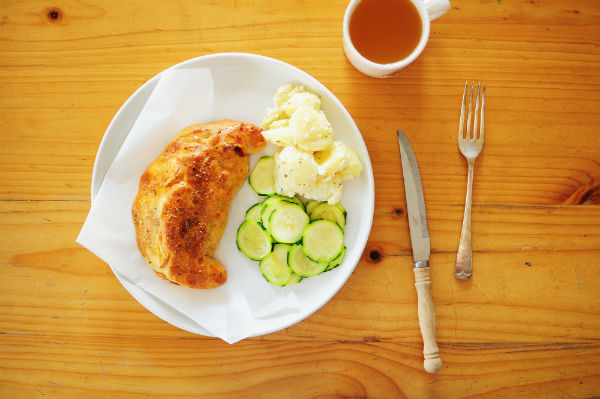
These McCain pizza pockets used to be one of my favourite foods (apart from Macca's breakfast) on my way to Chinese school on a cold Saturday morning. I'd sleep in and by the time I finished getting ready, there was only enough time to get to school. Bag in one hand and breakfast slipped into a sandwich bag in the other before rushing out the door. Just so you know, these calzones are just as good cold and sandwich bag friendly.

I'm submitting this post to Aspiring Bakers #35: A Palate for Pizza hosted by Joey of Little Accidents in the Kitchen. (Thank you for taking the time to host!)

▲ ▲ ▲

Calzones     makes 10

I made two versions; one with chilli salami, boiled sliced potatoes, halved roma tomatoes, pan fried chorizo, sauteed sliced onions, shredded ham and mozzarella cheese. The other one was classic Hawaiian with spicy salami, with a few sans pineapple and salami for the sister.

1 batch herbed pizza dough (recipe below)
1 batch pizza sauce (recipe below)
assorted fillings*
1 large egg

Preheat oven to 200 degrees. 

Divide the pizza dough into 10 equal sized pieces. Roll out thinly on a lightly floured surface keeping the shape roughly circular. Spread with a few heaped spoonfuls of pizza sauce, leaving a 1cm border and pile on the assorted fillings in the centre, finishing with the cheese. To make the calzone, bring the sides to the center, pinch together and fold over. Twist the ends together and tuck inwards. 

Transfer calzones onto a non-stick greaseproof paper lined tray and brush with beaten egg. Bake for 15-20 minutes or until golden brown.

*For 10 calzones, I used roughly 350g shredded ham, 150g chilli salami, 100g shaved ham, 1 Spanish chorizo, 1 medium onion, 4 baby potatoes, a handful of roma tomatoes, a few slices of canned pineapple and a mountain of grated mozzarella. 

▲ ▲ ▲

Herbed pizza dough    
adapted from the Kambrook Size Select Bread Maker booklet 

375ml warm water
60ml cooking oil
1 tsp sugar
1 tsp salt
1 tsp dried Italian herbs
1 tsp dried thyme
1 tsp garlic powder
1 tsp onion powder
1 tsp mustard powder
600g bread flour
2 tsp dried yeast

Put the ingredients into your bread machine according to machine instructions and select the pizza function (30 minutes kneading, 1 hr proving). If you are making it by hand, combine the dry ingredients into a mixing bowl and make a well. Combine the water and oil together, pour into the flour and mix to form a dough. Knead until it is smooth and springy. Place the dough into a lightly oiled bowl and wrap with a piece of lightly oiled cling wrap. Leave in a warm place to rise until it doubles in size.

▲ ▲ ▲

Pizza sauce     makes around 500g

400g tinned Italian diced tomatoes
45g tomato paste
pineapple juice or brown sugar, as required
salt and white pepper, as required
dried Italian herbs and thyme, as required

Bring the diced tomatoes to a boil and stir in the tomato paste. Season with pineapple juice or sugar, salt, white pepper and dried herbs. Leave to cool.